
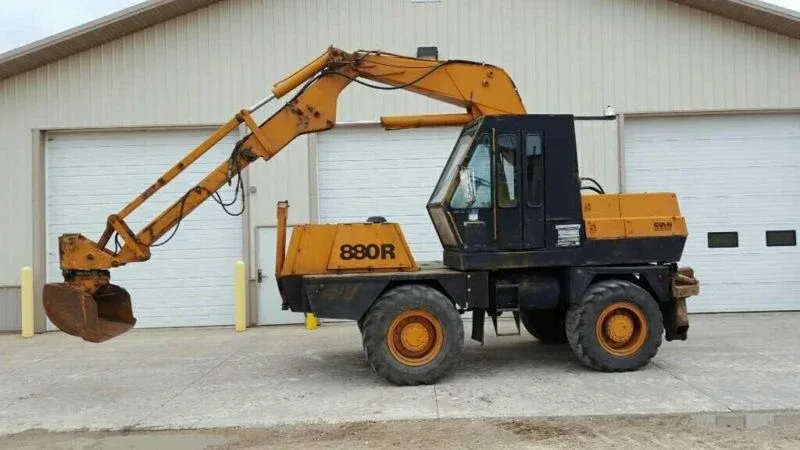
The Case 880R is an old machine, and it’s still earning its keep on a lot of job sites. The usual reason is simple: someone looked after it. These excavators run a 336-cubic-inch (5.5 L) four-cylinder diesel, the 336BD family that Case also put in backhoes, loaders and skidders. Parts are still around and the design is straightforward. The machine doesn’t forgive neglect, though, and most expensive failures start with something small that was skipped.
This checklist covers what an owner or operator can realistically do. Oil capacities, service intervals, and torque figures vary by serial number and by whether your engine is the 336BD or the turbocharged 336BDT. Confirm them against your own Case 880R service manual rather than relying on a general guide, this one included.
Before every shift
A five-minute walk-around catches most problems early.
- Check the engine oil level on flat ground with the engine off. Note any change from yesterday. A level that keeps dropping tells you something even when nothing is visibly leaking.
- Check coolant in the radiator or overflow bottle. Look at the hoses for swelling, cracks or wet clamps.
- Look at the fuel tank level and drain a little water from the sump or filter bowl if your machine has one. Water in the fuel is a common cause of hard starting and injector wear.
- Check the hydraulic oil level in the sight gauge with the boom and stick in the position the manual specifies. Level readings are only accurate in that position.
- Walk around the machine looking for fresh oil on the ground, on cylinder rods and around hose ends.
- Grease the fittings the manual lists for daily service, usually the bucket, stick and boom pivots.
Engine care
Oil and filters matter most. Change the oil and filter on the schedule in your manual, and shorten that schedule if the machine works hard, sits idling a lot or runs in dust. Old oil does the real damage in a diesel that spends long hours at low load.
The air cleaner is the next priority. Excavators work in dust all day, and a clogged or damaged element lets grit into the cylinders. Check the restriction indicator if you have one, and tap out or replace the element as the manual describes. Never run without it, even briefly.
Replace fuel filters on schedule too. A turbocharged 336BDT is more sensitive to poor fuel and low oil pressure than the naturally aspirated version, so don’t stretch either interval. Let a turbo engine idle for a minute or two before shutting down after heavy work. That lets the turbocharger bearings cool while still receiving oil.
Check the belts for cracks and glazing, and for correct tension. Look at the cooling fins for packed mud and chaff. A radiator that can’t shed heat will eventually cost you a head gasket.
Watch the exhaust and the gauges. Blue smoke points to oil burning, black to too much fuel or too little air, and white that doesn’t clear once the engine is warm to a coolant or injector problem. Oil pressure that’s lower than normal when warm deserves attention that day.
Hydraulic system care
Hydraulic trouble is usually contamination. Dirt, water and old oil wear pumps, valves and motors from the inside, and by the time you notice, the damage is done.
- Replace the hydraulic filters on schedule and keep the right filter on hand. Cut open old ones now and then to see what they caught. Metal flakes are an early warning.
- Keep the oil clean. Wipe the area around the filler cap before opening it, and use only fluid that meets the manual’s specification.
- Inspect hoses and fittings for chafing, bulges and weeping. Replace a hose that’s rubbing before it fails under load. A burst hose on an excavator can drop a boom or spray hot oil at someone.
- Look at the cylinder rods for scoring or pitting. A scratched rod will cut the seals no matter how new they are.
- Pay attention to how the machine feels. Slow swing, a weak stick or boom, or hydraulics that get sluggish as the oil warms up all point to wear in the pump, relief valve or a cylinder seal.
- Check the swing motor and track motors for leaks and unusual noise.
Hot oil is the other enemy. If the machine runs warmer than usual, check the oil cooler for debris before you suspect anything bigger.
Keep a simple log
Write down the hour-meter reading, what you changed and what you noticed. A notebook in the cab is fine. It stops you doubting whether the filters were changed last month, and it shows a buyer later that the machine was cared for.
Use the right manual
A checklist like this gets you started, but torque specs, fluid grades and adjustment procedures vary by serial number, and an old Case machine can have several running changes. Keep the service manual, operator’s manual and parts catalog for your exact model close by. A wrong part or a wrong torque costs far more than the manual does. If you need them, OEM Manual Store carries Case manuals for machines like the 880R.
Done consistently, none of this is difficult, and it keeps an old excavator dependable.